

Electrical Enclosures
Electrical enclosures are more than just metal boxes; they are the frontline defense for the sensitive components that power our modern world. From the humming servers of a data center to the grit of an oil refinery, these structures ensure that electrical systems remain functional, safe, and durable.
The Primary Function of an Enclosure
The fundamental purpose of an electrical enclosure is twofold: Protection of Equipment and Protection of Personnel.
Environmental Shielding: Sensitive components like PLCs, circuit breakers, and power supplies are vulnerable to dust, moisture, and corrosive chemicals. An enclosure creates a controlled micro-environment.
Safety Barrier: By housing high-voltage components, enclosures prevent accidental contact by workers, significantly reducing the risk of arc flash or electrocution.
Heat Dissipation: Modern enclosures often incorporate thermal management systems—such as fans, heat exchangers, or air conditioning—to prevent component failure due to overheating.
Materials and Construction
The choice of material is dictated by the environment in which the enclosure will operate.| Material | Key Characteristics | Common Applications |
| Carbon Steel | Cost-effective and durable; usually powder-coated (e.g., RAL 7032) | Indoor industrial settings, warehouses |
| Stainless Steel | Superior corrosion resistance (304 or 316L grades) | Marine, food processing, and chemical plants |
| Galvanized Steel | Coated with zinc to prevent rust | Outdoor utility and HVAC applications |
| Aluminium | Lightweight and excellent at dissipating heat | Telecommunications and aerospace |
| GRP/Polycarbonate | Non-conductive and highly resistant to chemical weathering | Water treatment plants and coastal areas |
Standards and Ratings: NEMA vs. IP
To ensure consistency, enclosures are rated based on their ability to withstand specific conditions. The IP Rating System (IEC 60529) The Ingress Protection (IP) system uses two digits. The first refers to solid objects (0–6), and the second refers to liquids (0–9K).- IP55: Protected against dust and low-pressure water jets.
- IP66: Dust-tight and protected against powerful water jets—essential for outdoor use.
- NEMA 1: General purpose, indoor.
- NEMA 4X: Watertight, dust-tight, and corrosion-resistant (often 316L stainless steel).
Manufacturing Excellence
High-quality manufacturing is what separates a standard box from a reliable industrial asset. Key processes include:- CNC Laser Cutting & Bending: Ensuring precise dimensions for modular assembly.
- Foam-in-Place Gaskets (FIPFG): Using CNC machines to apply polyurethane gaskets directly onto the door, ensuring a seamless, airtight seal that manual gaskets cannot match.
- Modular Design: Allowing multiple enclosures to be “bayed” or joined together to accommodate expanding switchgear or control systems.
Specialized Applications
Enclosures must often meet the niche demands of specific industries:- Marine & Offshore: Requiring high-grade stainless steel to survive constant salt spray.
- Oil & Gas (ATEX/Ex): “Explosion-proof” enclosures designed to contain an internal explosion and prevent it from igniting the surrounding atmosphere.
- Data Centers: Perforated doors and advanced cooling racks designed specifically for airflow and cable management
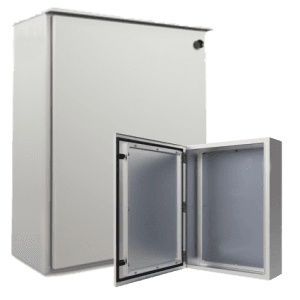
Wall Mount Enclosures
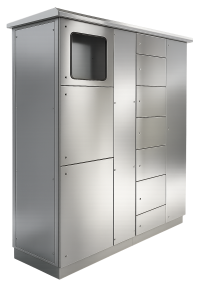
Floor Standing Enclosures
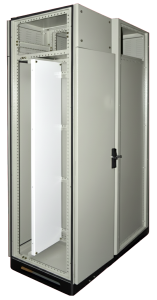
Extendable Enclosures